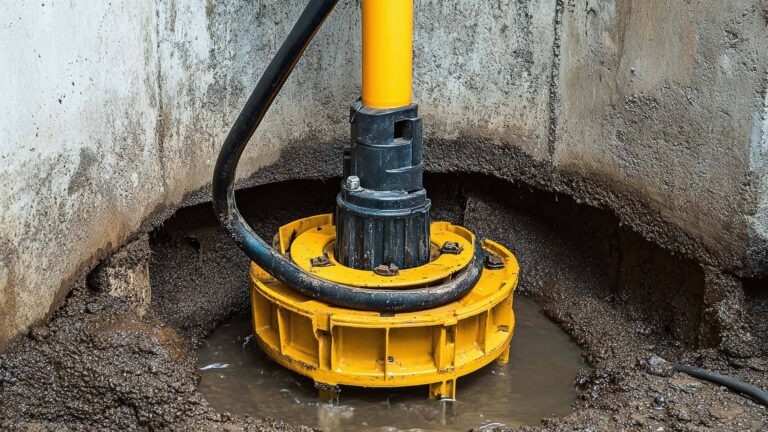

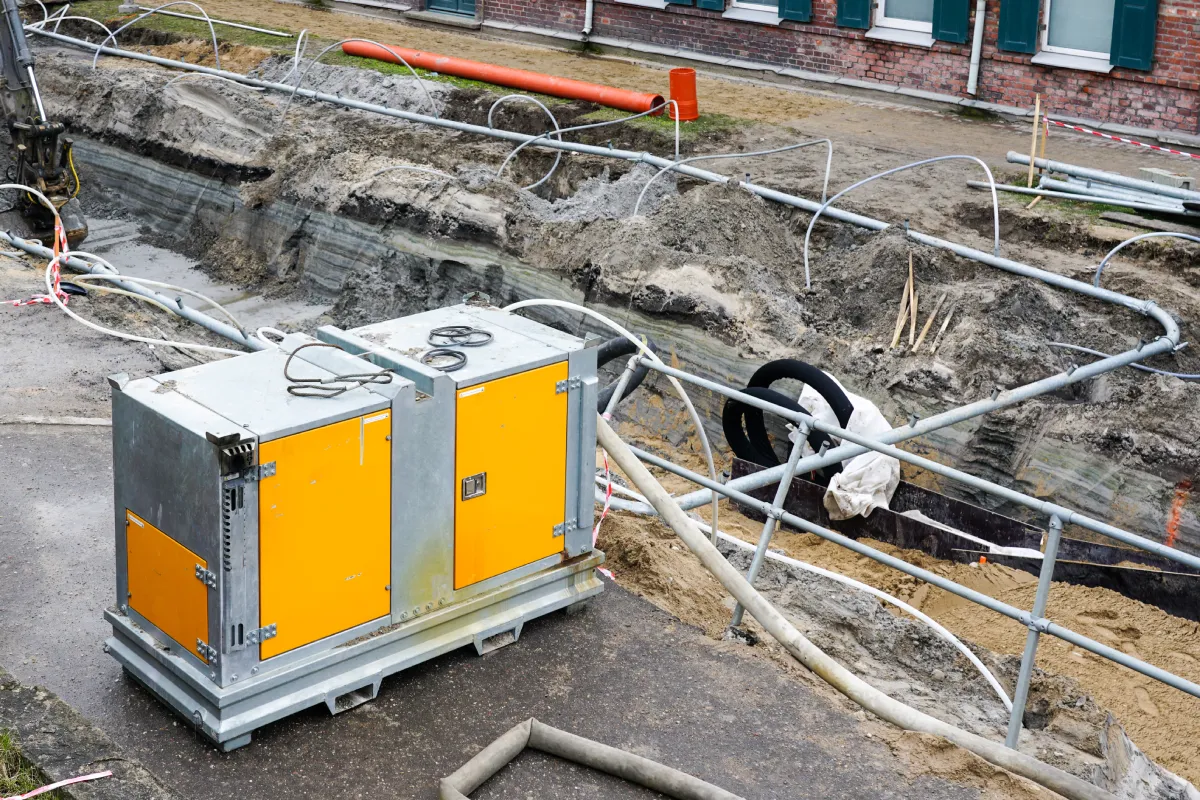
Self-priming dewatering pumps have redefined how modern worksites tackle unpredictability. Gone are the days when dewatering meant long priming delays and sluggish restarts after every shutdown. Today’s pumps are agile, automated, and built for environments that don’t wait, where rain, groundwater, or seepage can stall millions in progress overnight. In large-scale infrastructure projects, open-pit mining, and defense engineering zones, the difference between a site moving forward or standing still often comes down to how quickly water drains. Efficient dewatering isn’t a background task anymore; it’s the pulse of productivity. The new generation of self priming dewatering pumps embodies that shift, designed to think faster, react smarter, and deliver consistency where conditions rarely do.
Self-priming dewatering pumps play a central role in meeting these demands by eliminating the need for external priming equipment and reducing setup time. Their ability to automatically evacuate air from the suction line allows operators to start pumping quickly, even in challenging conditions. In industrial environments, they support pit drainage, process water transfer, and emergency flood control. Municipal projects rely on them for sewer bypassing, stormwater management, and infrastructure maintenance. Defense and naval operations deploy them in remote or rapid-response scenarios where reliability and fast mobilization are critical.
Depending on operational needs, project teams can choose between standalone units or integrated systems. Self-priming dewatering pump sets combine a pump with an engine or motor on a skid or trailer, making them suitable for mobile or temporary applications. For more comprehensive site requirements, self-priming dewatering pump packages provide a turnkey option that can include hoses, control panels, power components, and enclosures. These configurations allow decision-makers to align equipment selection with deployment speed, site constraints, and long-term utilization goals.
What Are Self-Priming Dewatering Pumps?
To generate the vacuum required to start flow, traditional centrifugal and submersible pumps often require human priming or additional equipment. If air gets into the line, they may lose their suction, which might result in downtime, the requirement for vacuum-assisted devices, or repeated setup. These restrictions result in increased labor needs and postponed operations in distant, high-volume, or constantly changing site environments.
Self-priming dewatering pumps address these challenges by automatically removing air from the suction line and casing before moving water or slurry. Once filled, the pump recirculates liquid within the casing to maintain prime even if intermittent air is introduced. This capability reduces operator intervention, eliminates the need for external priming units, and supports faster deployment across a variety of industrial, municipal, and field applications. Because dewatering pumps are designed to handle fluctuating water levels and unpredictable solids content, they are better suited to emergency response, bypass operations, and mobile deployments.
To meet different operational models, equipment can be configured as individual pumps or complete systems. Self-priming dewatering pump sets typically include an engine or electric motor mounted on a skid or trailer, offering flexibility for temporary sites or rapid relocation. For projects requiring integrated solutions with minimal onsite assembly, self-priming dewatering pump packages provide the pump, power source, controls, and accessories as a unified system. This reduces setup time, simplifies logistics, and supports long-term or multi-phase project requirements.
Key Applications by Industry
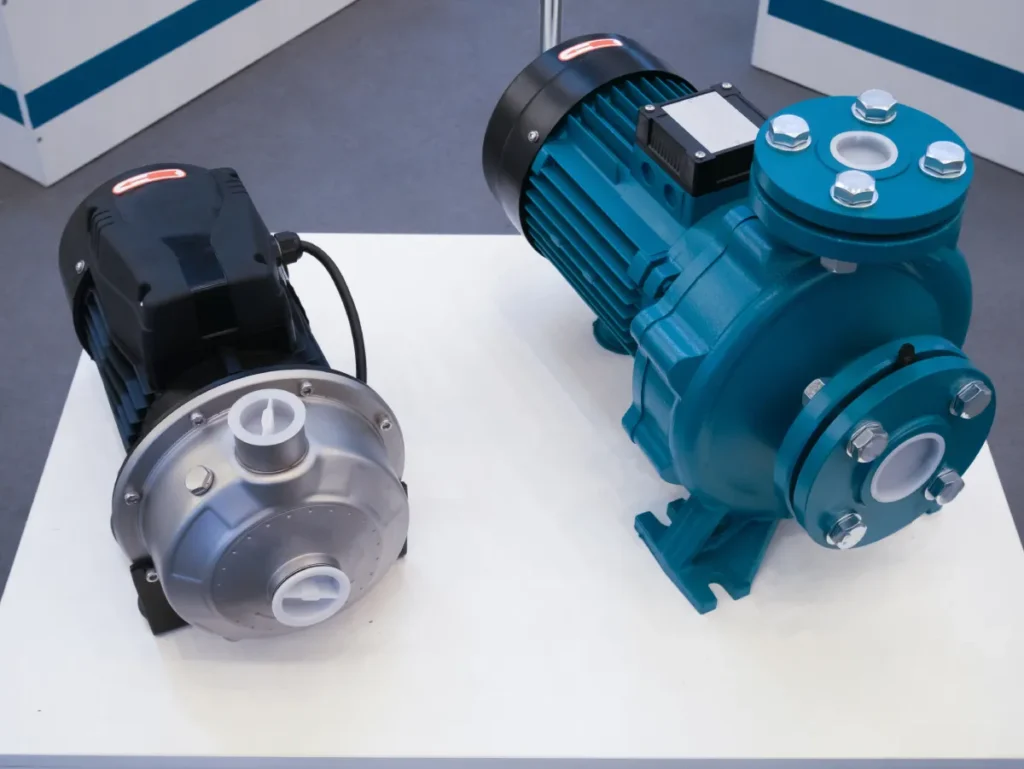
Self-priming dewatering pump sets are used in a variety of industries where productivity and safety are directly impacted by water removal, mobility, and uptime. They are ideal for difficult locations and mission-critical operations because they can operate in a variety of conditions and start pumping without manual priming.
In the mining sector, self-priming dewatering pumps manage pit dewatering, tailings support, and slurry transfer around excavation areas. Mines often operate in remote environments with fluctuating water tables and abrasive sediment, making reliability and solids handling essential. When operations span multiple zones or benches, self-priming dewatering pump sets enable crews to quickly relocate equipment without compromising flow performance.
Drilling pad drainage, containment area pumping, and off-grid exploration assistance are examples of oil and gas uses. Systems that can be quickly moved and tolerate exposure to sediments, hydrocarbons, and fluctuating water levels are necessary for operators. In these situations, self-priming dewatering pump packages are frequently used as they integrate the pump, power source, and controls into a single, portable unit.
Heavy construction projects and marine operations rely on dewatering during foundation work, cofferdam support, and barge-based pumping. Sites near coastlines or rivers need equipment that automatically restarts when air enters the line. Dewatering pumps mitigate the delays associated with manual re-priming and reduce labour costs. For contractors working across multiple sites, self-priming dewatering pump sets provide the flexibility to move equipment without reconfiguring external systems.
Municipalities use these pumps for emergency flood response, stormwater control, and sewer bypassing. During seasonal spikes, quick deployment is essential. Self-priming dewatering pump packages consist of integrated hoses, engine or motor units, and control panels, making them an operationally ready option. During maintenance or emergency operations, their reliable performance across a range of water conditions ensures continuity.
Military and naval teams deploy self-priming dewatering pumps for base infrastructure, field engineering, and coastal operations. Equipment may need to function in remote areas with limited access to auxiliary gear or power. In these cases, both self priming dewatering pump sets and self priming dewatering pump packages offer dependable options. Their portability, durability, and autonomous priming capacity reduce logistical complexity and improve response capability across disciplines.
Performance Factors to Consider
Selecting the right configuration of self-priming dewatering pumps requires aligning performance variables with site demands, fluid characteristics, and operating environments. Each factor influences efficiency, runtime costs, and deployment speed, especially when working across industries with tight schedules and compliance standards.

Suction lift capability and priming time determine how quickly operations can begin and how reliably pumps perform when water levels fluctuate. In remote or uneven terrain, the ability of self-priming dewatering pumps to evacuate air and maintain suction without manual intervention reduces downtime and labour requirements.
Flow rate and head specifications must match the volume of water to be removed and the elevation or discharge distance involved. Undersized equipment can create bottlenecks, while oversized systems increase fuel consumption and capital cost. Both self-priming dewatering pump sets and self-priming dewatering pump packages can be configured to meet specific pressure and volume targets.
When handling drilling fluids, silt, gravel, or sediment, solids handling capability is crucial. Pumps with open impeller designs and abrasion-resistant parts continue to operate without regular maintenance pauses. Self-priming dewatering pumps are hence appropriate for applications involving varying debris loads, such as mining, infrastructure, and maritime activities.
Fuel or electric power options influence mobility, operational costs, and site compliance. Diesel-driven self-priming dewatering pump sets are typically deployed in off-grid, temporary, or high-mobility environments. In contrast, electric-driven units may be preferred for fixed installations or noise- and emission-sensitive locations. For turnkey readiness, self-priming dewatering pump packages offer integrated power sources matched to expected duty cycles.
Compatibility with existing piping and discharge systems reduces modification costs and accelerates commissioning. Pumps should accommodate varying hose diameters, discharge pressures, and connection types. Whether deploying modular equipment or full system assemblies, both self priming dewatering pump sets and self priming dewatering pump packages help ensure proper integration with legacy infrastructure and evolving project requirements.
Evaluating ROI and Operational Efficiency
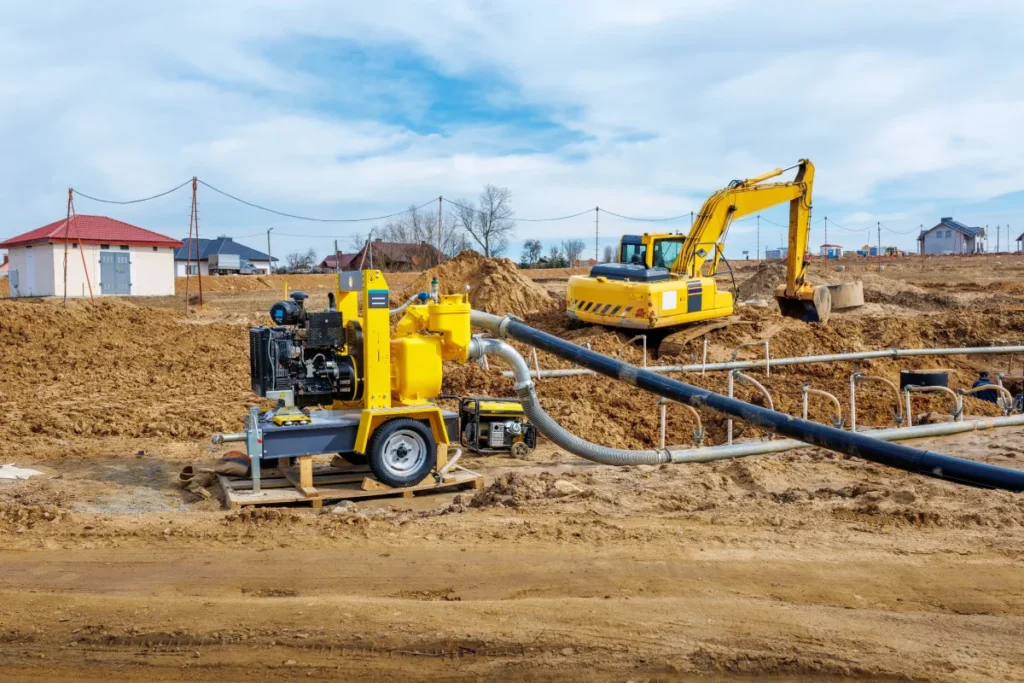
Evaluating return on investment goes beyond purchase price and focuses on how effectively equipment supports uptime, labour planning, and multi-phase operations. For many projects, the way self-priming dewatering pumps influence daily performance has a greater financial impact than initial capital outlay.
Shorter project timelines and lower contractor costs are directly affected by reduced downtime and faster setup. Self-priming dewatering pumps reduce delays caused by trapped air, varying water levels, or repeated restarts, as they do not require external priming devices. Across mining, construction, municipal, and energy sectors, this dependability boosts productivity.
Maintenance access and predictable service intervals help control lifecycle costs. Configurations with front-pull designs, replaceable wear components, and clear inspection access reduce the time technicians spend on routine servicing. Fewer disruptions mean that self-priming dewatering pumps can stay in rotation longer without compromising performance or safety standards.
Fuel efficiency is another key driver of ROI, particularly in applications where pumps operate continuously or under high load. Dewatering pumps designed with efficient impellers and balanced engine-matching reduce fuel consumption and lighten the manpower burden associated with refuelling, supervision, and manual restarts. In remote or labour-constrained environments, these gains are even more pronounced. When mobility is essential, self-priming dewatering pump sets deliver transport-ready efficiency without sacrificing flow.
Scalability supports phased developments, seasonal demands, or emergency deployments. Equipment that can be redeployed quickly without reconfiguration offers long-term value across changing work scopes. Self-priming dewatering pump packages further enhance operational agility by bundling the pump, power source, and accessories into a single integrated system. This allows procurement and project teams to adapt capacity without sourcing additional components, thereby minimizing storage and transport complexity.
Self-priming dewatering pumps’ capacity to decrease human labor, speed up startup times, and maintain steady discharge performance results in quantifiable operational savings and improved project economics in every situation.
Environmental, Safety, and Compliance Considerations
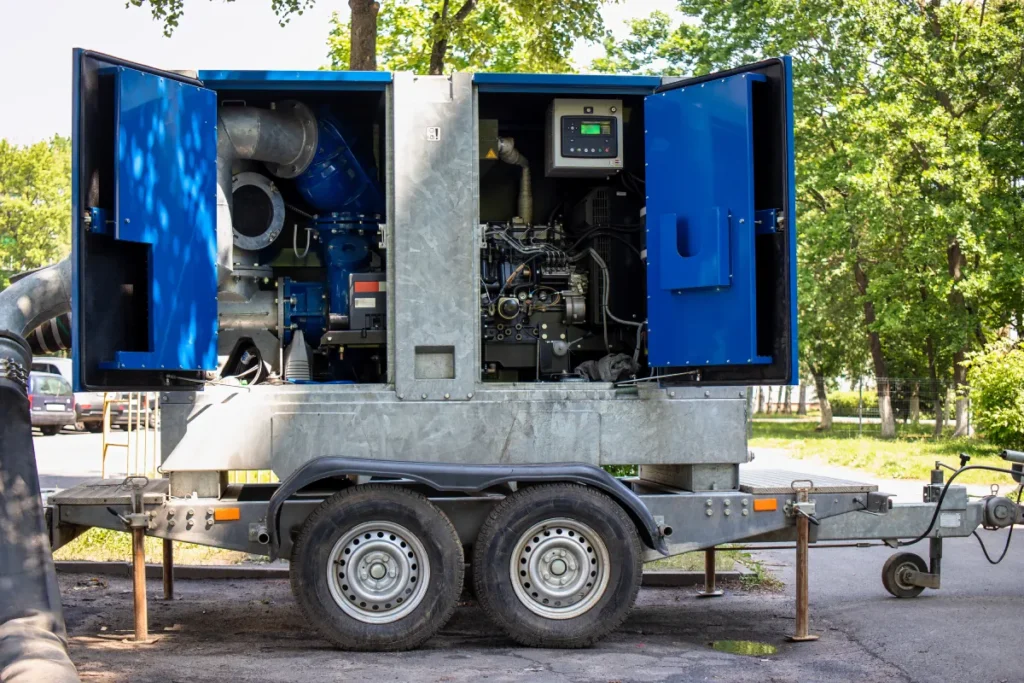
Procurement decisions are directly influenced by environmental compliance and safety performance, particularly for projects subject to industrial regulation or government inspection. To comply with changing regulations across countries, self-priming dewatering pumps are increasingly being specified with spill-prevention features, acoustic enclosures, and emissions controls.
Noise levels are a major consideration in urban worksites, military bases, and remote communities. Acoustically treated housings and balanced engine configurations enable dewatering pumps to operate within acceptable decibel levels without sacrificing performance. When mobility is required, self-priming dewatering pump sets can be fitted with sound-attenuated enclosures to minimise disturbance near residential zones, sensitive habitats, or active operations.
Emissions compliance is critical for industrial and government projects, particularly under Tier 4, Stage V, or equivalent standards. Dewatering pumps equipped with low-emission diesel engines or electric drives help operators meet air quality obligations without redesigning their workflows. In sectors such as oil and gas, mining, and defence logistics, self-priming dewatering pump packages can include integrated containment, ventilation, and monitoring features to safely manage fuel, exhaust, and condensate.
Handling sediment, sludge, and contaminated water requires pumps capable of moving abrasive or chemically affected fluids without leakage or clogging. The internal design of self-priming dewatering pumps supports the passage of solids and prevents airlocks that could lead to spills or overflows. For sites with regulated discharge requirements, self-priming dewatering pump sets can be paired with filtration or treatment modules to ensure that removed water meets environmental thresholds.
Sector-specific regulatory standards vary, but common criteria include safe operator access, hazardous fluid control, and spill containment. Self-priming dewatering pump packages can be set up with drip trays, lockable panels, grounding systems, and emergency shut-offs to meet industrial compliance frameworks, mining safety regulations, and military requirements. Additionally, their self-priming capabilities lower exposure hazards in limited or volatile areas by eliminating the need for workers to maneuver around open water sources or suction inputs.
Across these contexts, the adaptability of self-priming dewatering pumps enables organisations to manage environmental impact and safety liability while maintaining target flow rates and operational continuity.
Procurement Checklist for Decision-Makers
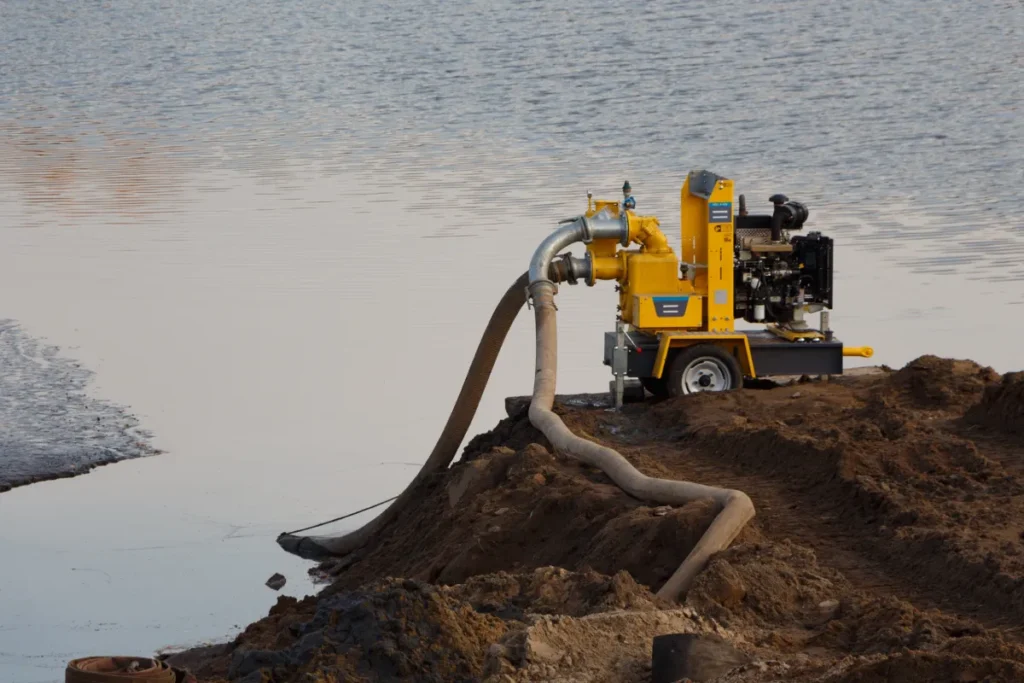
Using a systematic procurement strategy ensures that equipment selection aligns with long-term financial planning, operational risk, and project needs. When selecting self-priming dewatering pumps, decision-makers should consider factors beyond just price and horsepower.
Site conditions and material characteristics influence pump design, impeller type, and abrasion resistance. Self-priming dewatering pumps must handle solids, silt, or slurry without frequent maintenance or performance loss. In mining pits, flood zones, or drilling pads, maintaining suction despite variable water levels and debris is crucial for uninterrupted operation.
Power source availability determines whether a diesel, electric, or hybrid configuration is appropriate. Projects in remote or temporary locations often rely on self-priming dewatering pump sets with engine-driven systems. At the same time, industrial facilities with grid access may integrate electric-driven models to minimise emissions and simplify permitting.
Portability and deployment constraints affect mounting style, skid design, and transport requirements. Self-priming dewatering pumps are frequently moved between phases or job sites, making trailer-mounted or skid-based configurations advantageous. Where integrated solutions are preferred, self-priming dewatering pump packages offer a consolidated approach that reduces on-site assembly and speeds mobilisation.
Service support and spare parts availability directly influence uptime and lifecycle cost. Reliable access to wear components, seals, and impellers ensures that self-priming dewatering pumps remain operational during high-demand periods. For industries with remote work zones or rapid timelines, supplier capability can be as important as equipment specification.
Budget versus lifecycle cost analysis helps avoid short-term savings that lead to operational setbacks. Procurement teams should weigh fuel consumption, maintenance frequency, and redeployment flexibility against initial purchase price. Well-matched self-priming dewatering pumps reduce labour demands, downtime, and replacement intervals, delivering stronger long-term value and improved project outcomes.
Consultation
Selecting the right equipment requires more than matching flow rate and horsepower. Site conditions, regulatory expectations, and long-term operating costs all influence whether self-priming dewatering pumps deliver full value. A technical consultation can help assess these variables before finalising procurement decisions. By evaluating suction requirements, discharge conditions, power access, and solids loading, project teams can avoid oversizing, underperformance, and deployment delays.
Pump & Dredge Direct provides guidance based on real-world applications across construction, mining, municipal, and industrial operations. Their engineers and product specialists help clients identify which self-priming dewatering pumps align with project scale, environmental factors, and budget objectives. For complex or phased developments, early assessment ensures that equipment choices support both immediate deployment and future expansion.
With access to a wide range of configurations and performance tiers, Pump & Dredge Direct supports organisations that require reliability under variable conditions. Their familiarity with field challenges allows them to recommend self-priming dewatering pumps that minimise setup time, reduce service interruptions, and deliver dependable output in demanding environments. Procurement leads and project managers can leverage this expertise to streamline equipment selection and enhance operational certainty, particularly when deadlines, compliance requirements, and safety standards are high.
Whether planning a new installation or reviewing existing assets, a direct consultation adds clarity to equipment sizing, mobility needs, and lifecycle cost expectations. Pump & Dredge Direct’s support ensures that self-priming dewatering pumps meet industry performance standards and deliver measurable value throughout the project.