

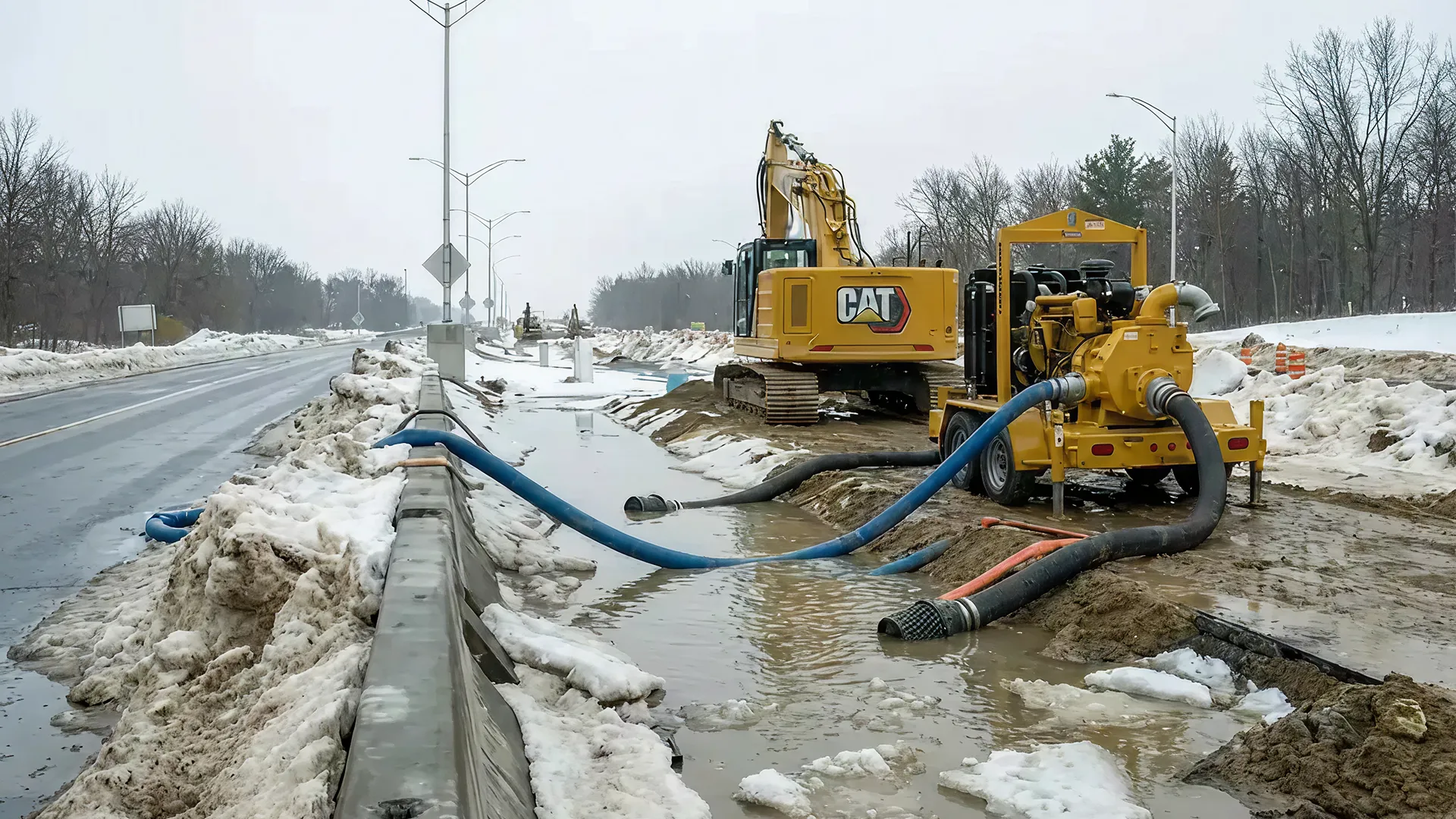
Every spring, the same issue shows up across Canadian cities. Snow starts melting faster than expected, rain arrives early, and water has nowhere to go. Storm drains back up, low areas flood first, and what begins as surface water quickly turns into an operational problem for municipalities, contractors, and facility managers.
Flood mitigation in these conditions is rarely about long-term infrastructure alone. When runoff volumes spike over a short period, action must be immediate. Water needs to be moved, not studied. This is where pump solutions become essential. They are used to control water levels, relieve pressure on drainage systems, and keep sites accessible during the most unstable weeks of the year.
Pump And Dredge Direct works with Canadian operators who deal with these conditions every season. By supplying industrial pumping and dredging equipment built for high flow rates and demanding environments, the company supports practical flood control during spring runoff, not just planning on paper. This article looks at how pump solutions are used on the ground to manage runoff in urban Canadian settings.
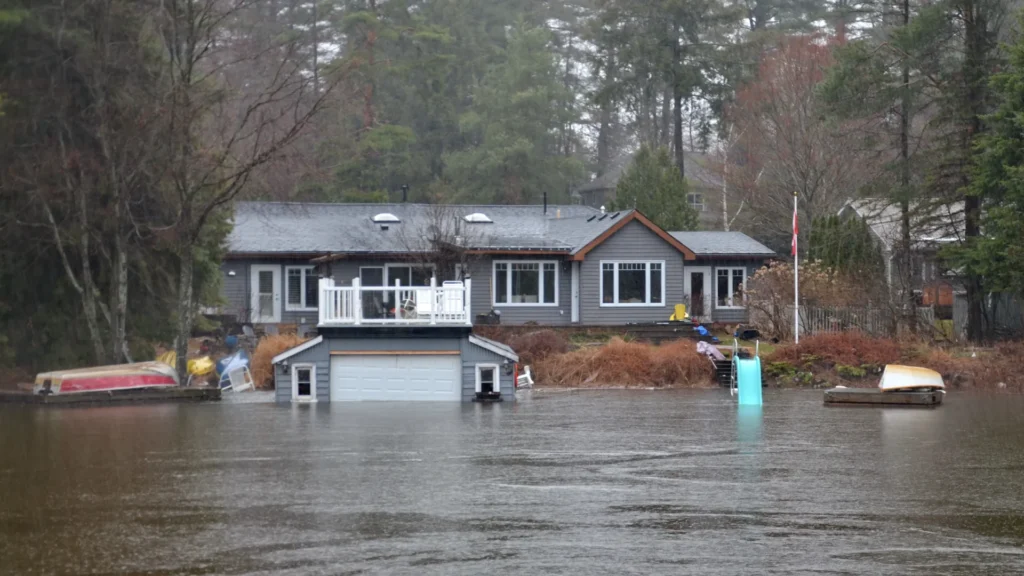
Spring Runoff in Canadian Cities Is Not a Design Problem. It Is a Timing Problem
In most Canadian cities, drainage systems are not failing because they were poorly designed. They fail because spring runoff does not arrive evenly. Snowmelt can accelerate in a few days. Rainfall can overlap before ground absorption recovers. Water volume rises faster than fixed systems can release it.
When this happens, runoff collects where systems are weakest. Older neighbourhoods, construction corridors, temporary roadworks, industrial yards, and low-lying areas are usually affected first. Once water reaches these areas, response time becomes critical. Waiting for natural drainage is rarely an option.
This is why flood control during spring runoff is treated as an operational task rather than a planning exercise. Crews are required to manage water levels in real time. Municipal teams and contractors often have to intervene before flooding reaches utilities, access roads, or active work zones.
Under these conditions, relying solely on gravity-based drainage is impractical. Water has to be redirected or removed altogether. This is where fluid handling systems are introduced as part of short-term flood control planning. Pumps allow water to be controlled when runoff volumes exceed normal discharge capacity, even if the event lasts only a few days.
For Canadian cities, spring runoff creates narrow windows where decisions have to be made quickly. Equipment selection, deployment speed, and flow capacity matter more than long-term system optimization. Effective flood control depends on having pump solutions available before runoff reaches critical levels.
How Pump Solutions Are Used During Spring Runoff on Urban Sites
When spring runoff starts to overwhelm urban drainage, pumps are not deployed as a last resort. In many Canadian cities, they are planned in advance and positioned where water is known to accumulate. This includes low road sections, stormwater ponds, underground access points, and construction zones where drainage is temporary or incomplete.
The most common use of fluid handling systems during runoff is water level control. Pumps are set up to move excess water away from saturated areas before flooding spreads. This may involve transferring water from retention basins into approved discharge points or bypassing storm drains that are already operating at capacity. In these situations, pumping reduces pressure on existing systems rather than replacing them.
Debris is another factor during spring melt. Ice fragments, sediment, and surface material are often carried into runoff flows. Pumps selected for flood mitigation must be able to handle this without frequent shutdowns. Equipment that clogs or requires constant attention creates delays that increase flood risk rather than reducing it.
This is where equipment selection becomes critical. Pump And Dredge Direct supplies pump solutions designed for high-volume water movement and challenging intake conditions. These systems are used by municipalities and contractors who need consistent performance during short, high-impact runoff periods. The goal is not continuous operation year-round, but reliable performance when runoff peaks and response time is limited.
In urban flood mitigation, pumps are rarely visible once conditions stabilize. Their role is preventative. By the time water levels begin to normalize, the effective deployment of pumps has already done its job.

Dredging and Sediment Control in Real Flood Mitigation Work
Spring flooding is not always about too much water. In many Canadian cities, it is about where the water can no longer move. Sediment builds up quietly. It settles in storm channels, ponds, culverts, and discharge paths over the years. By the time spring runoff arrives, flow paths are already restricted.
When snowmelt increases volume, these restrictions become obvious. Water slows down. It spreads sideways instead of moving forward. Pumps can move water out, but they must work harder and longer when sediment reduces channel capacity.
This is why dredging shows up in flood mitigation work more often than planning documents suggest. Removing silt and compacted material restores flow before pumping even begins. In some cases, dredging alone reduces flooding enough that only limited pumping is required during peak runoff.
Sediment also affects how pumps perform. Intakes placed near buildup areas draw in debris, not just water. Flow drops. Wear increases. Crews spend more time clearing blockages than controlling runoff. When dredging is done early, pump solutions operate closer to their rated capacity and with fewer interruptions.
Pump And Dredge Direct supports flood mitigation efforts where pumping and sediment control are treated as one system, not separate tasks. Dredging pumps and supporting equipment are used to clear accumulation before and during spring runoff, improving water movement and reducing emergency response pressure.
On urban sites, flood control works best when water has a clear path to move. Pumps manage volume. Dredging restores that path. Ignoring either side usually leads to the same result. Flooding returns the following season.

Pre-Season Readiness Matters More Than Emergency Response
By the time spring runoff becomes visible, options are already limited. Water is moving, access is restricted, and response work becomes reactive. Most flood control issues in Canadian cities are not caused by a lack of equipment. They happen because preparation started too late.
Pre-season readiness usually begins weeks before snowmelt peaks. Municipal teams and contractors review areas that flood every year. Low road sections, stormwater ponds, underground structures, and temporary drainage routes. These locations are not surprises. What changes is how quickly runoff reaches them.
Pump placement decisions are often made during this stage. Flow rates are estimated, discharge paths confirmed, and access for power or fuel is checked. If these details are ignored early, pump solutions are still deployed, but they are forced into inefficient setups once runoff is already active.
Flood mitigation during spring runoff depends heavily on equipment availability. Pumps that are already allocated elsewhere or require last-minute sourcing have slower response times. This is why many operators work with Pump And Dredge Direct ahead of the season, securing fluid handling systems that match expected runoff conditions and site constraints.
Pre-season planning also reduces risk during deployment. Crews are familiar with the equipment. Discharge routes are tested. Sediment-prone areas are identified. When runoff increases, action is controlled rather than rushed.
In practice, flood mitigation succeeds when the most important decisions are made before water levels rise. Once spring runoff begins, preparation turns into execution.
The Operational Cost of Delayed Flood Mitigation
Flooding during spring runoff is often described in terms of damage, but for most Canadian cities and contractors, the first impact is disruption. Roads close. Access routes disappear. Work stops. Crews wait while water slowly drains or is redirected under pressure.
When flood mitigation is delayed, costs start stacking up in small but persistent ways. Equipment sits idle. Labour hours increase without progress. Temporary repairs replace planned work. Even minor flooding can push project timelines out by days or even weeks, especially when water returns after the first melt cycle.
Pump solutions are usually brought in at this stage, but late deployment changes how they are used. Pumps that could have controlled runoff early are instead forced to operate continuously. Fuel use rises. Wear increases. Maintenance becomes reactive. What should have been controlled water movement turns into damage limitation.
Municipal operations face similar pressure. Traffic management, public complaints, and emergency response pull resources away from planned maintenance. Flood mitigation becomes visible only when it fails, even though the cost of failure is rarely captured in a single budget line.
Working with suppliers like Pump And Dredge Direct earlier in the season helps reduce these downstream costs. When pump solutions are selected and staged in advance, they are used to prevent flooding rather than respond to it. The result is shorter deployment periods, lower operating stress on equipment, and fewer interruptions to normal operations.
In spring runoff conditions, the cost difference between early action and delayed response is rarely dramatic at one moment. It shows up over time, across schedules, budgets, and system reliability. Flood mitigation works best when it prevents disruption instead of reacting to it.
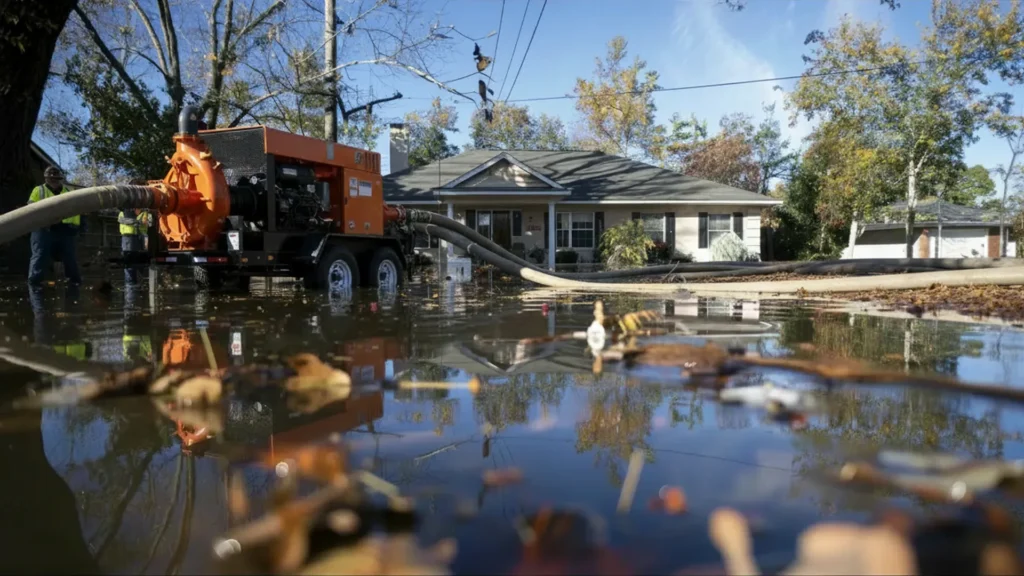
Why Flexible Pump Solutions Outperform Fixed Infrastructure During Spring Runoff
Fixed drainage infrastructure works best when conditions stay within a predictable range. Spring runoff rarely does. Melt rates change year to year. Rainfall timing shifts. Water volumes rise faster than design assumptions allow. When this happens, fixed systems have no way to adapt in the moment.
Once a storm sewer or outlet reaches capacity, it simply backs up. There is no adjustment available on site. Water continues to accumulate until levels drop naturally or intervention begins elsewhere. This limitation is why flooding often occurs even in areas with established drainage networks.
Flexible fluid handling systems operate differently. They are not tied to a single flow path or discharge point. Pumps can be positioned where water actually collects, not where drawings assumed it would go. Flow rates can be increased or reduced. Discharge locations can be redirected as downstream conditions change.
During spring runoff, this flexibility matters more than system size. Meltwater does not arrive evenly across a city. Some areas flood early. Others follow days later. Portable and modular fluid-handling systems allow flood mitigation efforts to shift with these patterns instead of remaining fixed in place.
Another advantage is response timing. Fixed infrastructure requires long planning cycles and permanent construction. Fluid handling systems can be deployed within hours. In runoff conditions where water levels change daily, this speed often determines whether flooding is controlled or allowed to spread.
This is why municipalities and contractors continue to rely on flexible fluid handling systems even in cities with modern drainage systems. Pumps do not replace infrastructure. They support it when conditions exceed design limits. Pump And Dredge Direct supplies pumping equipment that fits this role, allowing operators to adapt flood mitigation efforts to real site conditions as spring runoff unfolds.
In practical terms, fixed infrastructure defines the baseline. Flexible pump solutions manage everything that falls outside them. During spring runoff, that margin is often where flooding begins.
Closing Thoughts
Spring runoff will remain a recurring challenge for Canadian cities. Variations in snowmelt, rainfall timing, and ground conditions mean that flooding risk cannot be addressed solely through fixed infrastructure. Effective flood mitigation depends on how quickly water can be managed when conditions change.
Pump solutions and sediment control are not long-term replacements for drainage systems. They are tools used when those systems reach their limits. When planned early and applied correctly, they reduce disruption, protect access, and help urban operations continue through the most unstable part of the season.
In practice, flood mitigation is less about reacting to visible flooding and more about maintaining control before water becomes a problem. Spring runoff rewards preparation, flexibility, and clear pathways for water to move.